Why go over shingles?
- Less labor and disposal. No tear-off, no dumpster full of shingles.
- Faster job. The house is never left open to the weather.
- Extra insulation layer. The old shingles add a little insulation and sound deadening.
When it can work
- There is only one layer of existing shingles.
- The deck is solid with no soft spots, rot or sagging.
- Local code allows a new roof over the existing one.
- The metal panel manufacturer allows it in its installation instructions.
When to tear off
- Two or more layers of shingles already
- Soft, rotted or water-damaged decking
- Curling or buckled shingles that make the surface uneven
- Leaks whose source you need to find and fix
- When code or the manufacturer requires it
How it's usually done
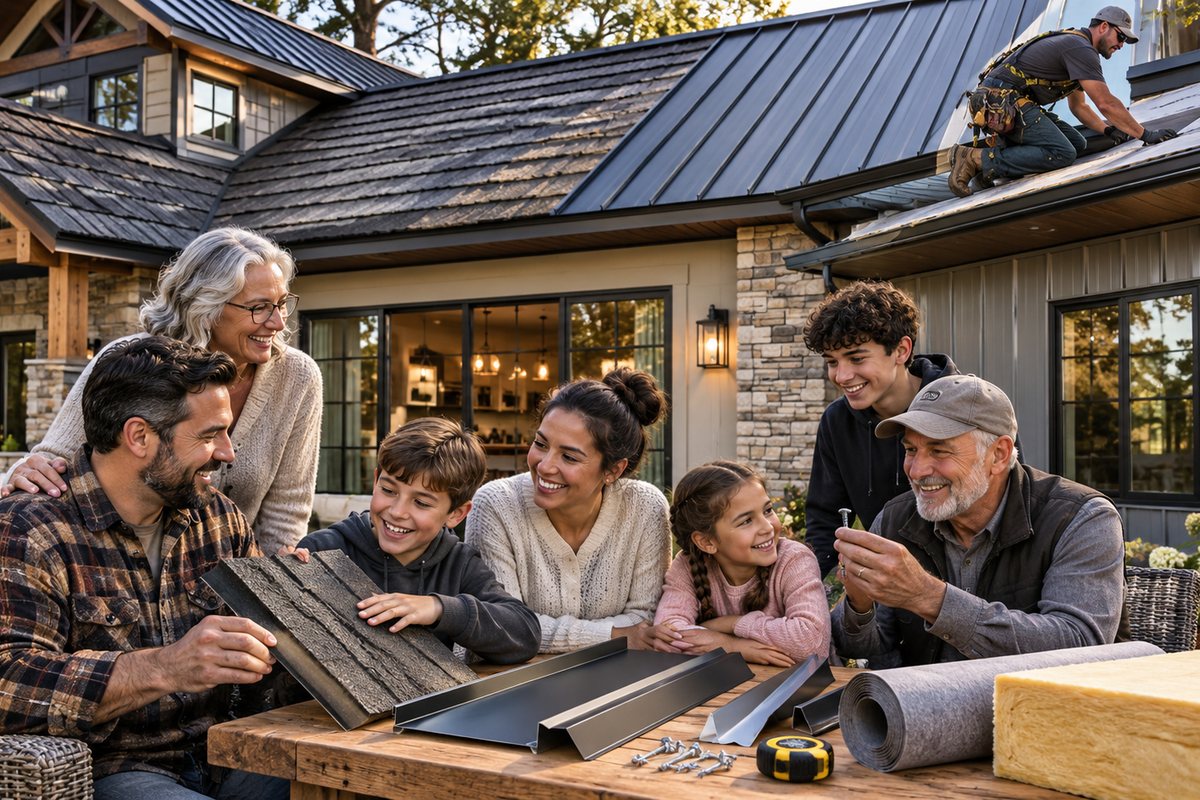
Option 1: Directly over the shingles. A synthetic underlayment goes over the shingles, then the metal panels. This works best with flat, even shingles and panels that allow it.
Option 2: Over battens or purlins. Wood battens, hat channel or purlins are fastened through the shingles into the framing, creating a flat base and an air gap under the metal. The air gap helps with ventilation and heat, and evens out bumps in the old roof. This is also the usual way stone-coated steel goes over old shingles, which lets a re-roof keep a shake, shingle or tile look without a tear-off.
Either way, the job needs:
- Underlayment over the old roof
- New trim at eaves, rakes, ridges and valleys, sized for the added height
- New flashing at walls, chimneys and pipes
- Longer fasteners that reach the deck or framing
- Ventilation planned for the new roof
Things to watch
- Weight: metal is light, but check the total weight with the extra layer.
- Fascia and trim height: the roof gets thicker at the edges, so drip edge and eave trim need to cover it.
- Ventilation: don't block existing vents; plan ridge and intake ventilation for the new roof.
- Insurance and warranty: check that the roof-over is acceptable to your insurer and the panel warranty.