
Shingle types
| Type | What it looks like | Typical weight per SQ | Typical wind rating | Common uses |
|---|---|---|---|---|
| 3-tab | Flat, even tabs in a uniform pattern | 200 to 240 lb | 60 to 70 mph | Budget re-roofs, sheds, rental properties |
| Dimensional (laminated) | Two or more layers for a textured, shadowed look | 220 to 300 lb | 110 to 130 mph | Most new homes and re-roofs |
| Designer (luxury) | Extra-thick layers that copy slate or shake | 300 to 450 lb | 110 to 130 mph | High-end homes, a slate or shake look |
| Impact-resistant | Dimensional or designer with a reinforced or rubberized mat | 250 to 400 lb | 110 to 130 mph | Hail-prone areas, like Texas and the Plains |
A roofing square (SQ) is 100 sq ft. Weights and wind ratings vary by manufacturer and depend on correct installation. Your quote lists the exact specs.
3-tab. The simplest and lowest-cost shingle. Each strip has three even tabs, giving a flat, uniform look. Many manufacturers now offer fewer 3-tab lines, so availability varies.
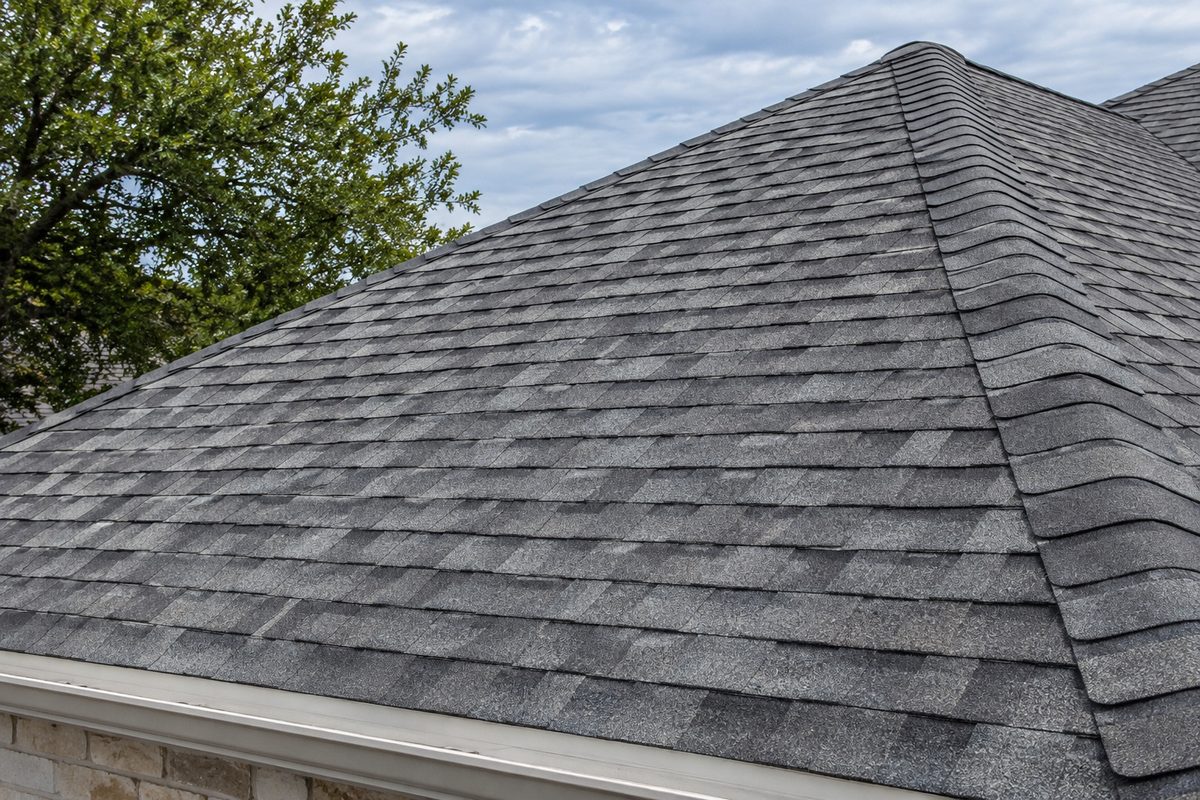
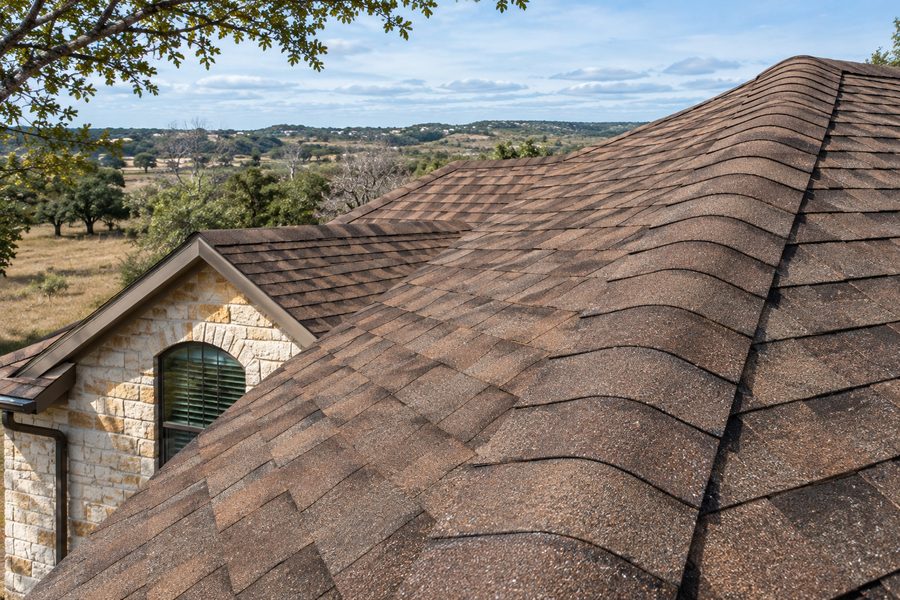
Dimensional. The standard choice today. Laminated layers create depth and shadow lines, the shingles are heavier and more wind-resistant than 3-tab, and warranties are usually longer.
Designer. The thickest and heaviest shingles, shaped to look like slate or wood shake. They add curb appeal at a higher price.
Impact-resistant. Built to resist hail damage. Many carry a Class 4 impact rating, the highest under the standard hail test. Some insurers offer premium discounts for Class 4 roofs; check with your insurer.
Other shingle features
- Algae resistance: granules treated to slow the black streaks caused by algae in humid climates.
- Cool or reflective granules: lighter or specially coated granules that reflect more sunlight and can help reduce attic heat.
- Color blends: most lines offer blended colors that hide minor variations and look more natural.
The shingle roof system
A shingle roof is more than shingles. Most manufacturers recommend, and some warranties require, using matching system components:
- Starter strip along the eaves and rakes, for a sealed first course
- Underlayment: synthetic underlayment over the deck, with self-adhered underlayment at eaves, valleys and penetrations in many areas
- Hip and ridge cap shingles shaped to fit over the ridge
- Ventilation: ridge vents and intake vents, so the attic can breathe
- Drip edge and flashing at the eaves, rakes, walls and chimneys
Using components from the same system can qualify the roof for a longer manufacturer warranty. Warranty details for your order are in your account.
Installation basics
- Roof pitch: shingles are usually installed on roofs of 4:12 and steeper. On 2:12 to 4:12, most manufacturers require extra underlayment.
- Nailing: correct nail placement and count is key to wind performance. High-wind areas often need more nails per shingle.
- Weather: shingles seal best in warm weather. In cold weather, hand-sealing may be needed.
- Layers: many codes allow only one or two layers of shingles. A tear-off gives the best result.
Always follow the manufacturer's installation instructions and local code.
What to include in your quote request
- Shingle type and color, or the look you want
- Roof size in squares, or a roof measurement report
- Ridge, hip, eave, rake and valley lengths
- Starter, ridge cap, underlayment, ventilation and flashing needed
- Job location
Related products
Common questions
How many bundles are in a square?
Usually three for 3-tab and most dimensional shingles, and four or more for heavier designer shingles.
How much extra should I order for waste?
A common rule is about 10% for simple roofs and 15% or more for roofs with many hips, valleys and dormers.
Are impact-resistant shingles worth it in hail country?
In hail-prone areas, many owners find the possible insurance savings and fewer claims worth the higher cost. Many also compare them with stone-coated steel, which keeps a shingle or shake look on a steel core. Ask your insurer about discounts before you decide.
How long do shingles last?
Commonly 15 to 20 years for 3-tab and 25 to 30 years or more for dimensional and designer shingles, depending on climate and ventilation.
Can shingles go over an old roof?
Sometimes, if local code allows and there is only one existing layer. A tear-off lets the deck be inspected and usually gives a better result.