Insulation types
| Type | What it is | Typical R-value | Common uses |
|---|---|---|---|
| Metal building insulation (faced fiberglass) | Fiberglass blanket with a vapor-retarder facing | R-10 to R-30 by thickness | Roofs and walls of metal buildings |
| Reflective insulation (radiant barrier) | Foil layers, often with bubble or foam cores | Varies by assembly | Barns, shops, under metal roofs, garages |
| Polyiso board | Rigid foam board with facers | About R-5.7 to R-6 per inch | Commercial low-slope roofs, walls |
| Tapered polyiso | Polyiso cut to slope | Varies with thickness | Building slope to drains on flat roofs |
| Cover board | Gypsum or high-density board | Low | Over insulation, under membranes |
| EPS / XPS foam board | Expanded or extruded polystyrene | About R-4 to R-5 per inch | Walls, foundations, some roofs |
| Spray foam (closed-cell) | Foam sprayed on and expanding to fill | About R-6 to R-7 per inch | Metal buildings, homes, sealing air leaks |
R-values and facings vary by manufacturer and thickness. Your quote lists the exact specs.
Metal building insulation. Rolls of fiberglass with a white or light facing that faces the inside of the building. The facing acts as a vapor retarder to control condensation, and it gives the interior a clean, bright look. Facings are rated for durability and appearance.
Reflective insulation. Reflects radiant heat from a hot roof. It works best with an air gap next to the foil and is popular in barns and shops in hot climates.
Rigid board. Polyiso is the most common insulation on commercial flat roofs. Tapered systems create slope, and a cover board protects the insulation under the membrane.
Why insulation matters on metal buildings
Warm, moist inside air hitting a cold metal roof creates condensation, which can drip, stain, rust framing and damage stored goods. Insulation with a continuous vapor retarder, sealed at seams and edges, keeps that moist air away from the metal. Insulation also cuts noise from rain and hail.
Roof coatings
| Coating | Good for | Notes |
|---|---|---|
| Silicone | Low-slope roofs, roofs that hold some standing water | Very UV-resistant; holds up well to ponding water |
| Acrylic | Metal roofs, sloped roofs, dry climates | Water-based, bright white, easy to apply |
| Polyurethane (aliphatic / aromatic) | High foot traffic, impact areas | Tough and durable; often used as base and top coats |
| Elastomeric (general) | Metal, mod-bit and other roofs | Stretches and recovers as the roof moves |
| Rust-inhibitive primer | Rusted metal roofs | Applied before the top coat to stop further rust |
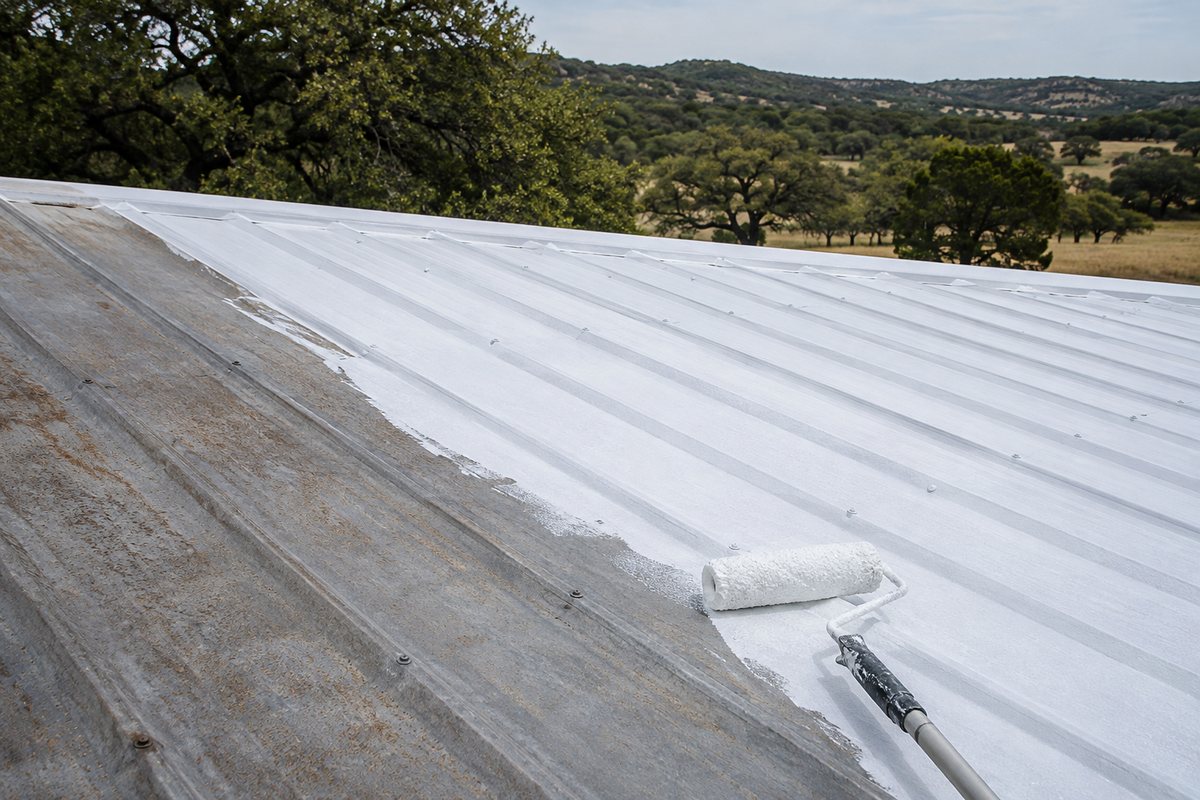
Reflective white coatings can lower roof surface temperatures and reduce cooling loads. Coatings are not a fix for a roof that is failing badly or holding wet insulation.
Coating a metal roof
A typical metal roof restoration includes:
- Cleaning and removing loose rust
- Tightening or replacing loose and worn fasteners
- Sealing seams, laps and fasteners with seam tape or brush-grade sealant
- Priming rusted areas
- Applying the base and top coats at the manufacturer's thickness
Installation basics
- Install metal building insulation tight between framing and panels, with facings lapped and taped at seams.
- Fasten rigid board with plates and screws or adhesive, as the roof system calls for.
- Apply coatings in dry weather within the temperature range on the label, at the thickness the manufacturer requires.
Always follow the manufacturer's instructions and local energy code.
What to include in your quote request
- Building type and size
- Insulation type and R-value, or the code you need to meet
- For coatings: roof type, roof size and roof condition
- Tapes, fasteners, primers and sealants needed
- Job location
Related products
Common questions
What R-value do I need?
It depends on the building, its use and local energy code. Tell us the building type and location and what your plans call for.
Will insulation stop my metal building from sweating?
Insulation with a sealed vapor retarder is the main fix for condensation. Ventilation helps too.
How long does a roof coating last?
Commonly 10 to 20 years, depending on the coating, its thickness and the climate. Many can be recoated later.
Can any roof be coated?
Most metal, mod-bit, single-ply and built-up roofs can, if the roof is still sound. Roofs with wet insulation or major damage usually need repair or replacement first.
Do coatings help with energy bills?
Reflective coatings lower roof temperatures and can reduce cooling costs, especially in hot, sunny climates.