Wall panel types
| Panel | Look | Typical coverage width | Typical gauges | Common uses |
|---|---|---|---|---|
| Exposed-fastener rib panel | Repeating ribs, screws visible | 36″ | 29, 26 | Metal buildings, barns, shops, warehouses |
| Corrugated | Wavy, rounded profile | 32″ to 36″ | 29, 26, 24 | Rustic and industrial looks, wainscot, accent walls |
| Concealed-fastener wall panel | Flat or lightly ribbed face, hidden screws | 12″ to 24″ | 26, 24, 22 | Commercial buildings, offices, modern homes |
| Board and batten | Vertical boards with raised battens | 12″ to 16″ | 26, 24 | Farmhouse and modern homes, accent walls |
| Lap siding (horizontal) | Horizontal planks, like wood lap siding | 8″ to 12″ exposure | 26, 24 | Homes, light commercial |
| Liner panel | Flat or light-ribbed panel for interiors | 36″ | 29, 26 | Inside shops, barns and warehouses |
Profiles, widths and gauges vary by manufacturer. Your quote lists the exact specs.
Exposed-fastener rib panels. The same panels used on many metal roofs also work as siding. Fast to install and economical, which makes them the standard for metal buildings.
Corrugated. The classic wavy metal look. Popular for barns, rustic homes and wainscot below other siding.
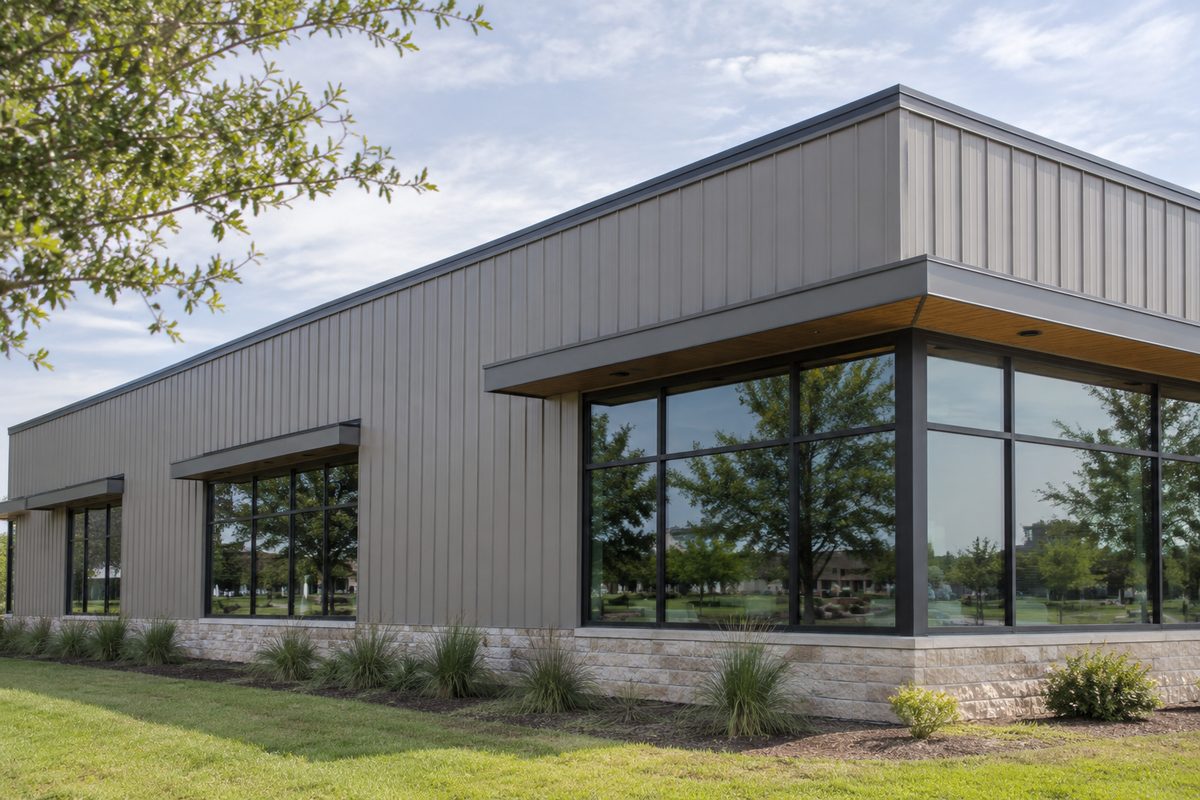
Concealed-fastener wall panels. Hidden fasteners and flat faces give a clean, architectural finish for commercial buildings and modern homes.
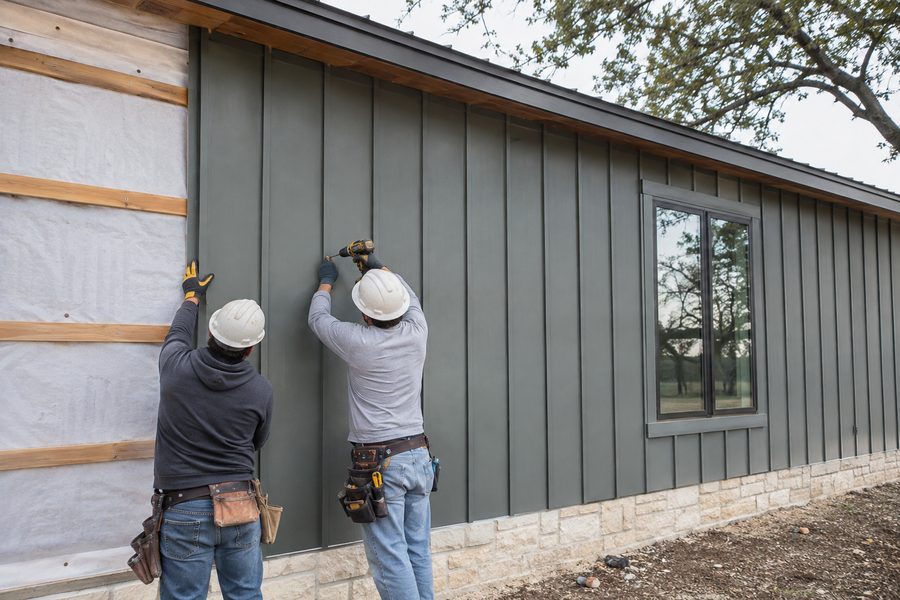
Board and batten and lap siding. Metal versions of traditional siding styles. They give the look of wood with far less upkeep.
Liner panels. Used inside buildings to protect insulation and create a clean, washable wall that reflects light.
Soffit
| Type | Description | Common uses |
|---|---|---|
| Solid soffit | No openings | Covered porches, areas that don't need airflow |
| Vented soffit | Perforated or slotted for airflow | Eaves where the attic needs intake ventilation |
| Partially vented | Vented strips between solid sections | A cleaner look with some airflow |
Metal soffit is commonly 12″ to 16″ wide and comes in steel or aluminum. Vented soffit is rated by net free area (NFA), the open area per foot, which is used to size attic ventilation.
Finishes and colors
Wall panels and soffit come in the same paint systems as metal roofing: SMP for everyday use and PVDF for the longest color life, plus bare aluminum-zinc coated steel. Many lines offer woodgrain, matte and textured finishes. Matching roof, wall and trim colors from one paint system keeps the building looking consistent. Color charts for your order are in your account.
Installation basics
- Framing: siding on metal buildings attaches to steel girts. On homes, it goes over sheathing with a weather-resistive barrier, often on furring strips for drainage.
- Direction: rib and corrugated panels usually run vertically; lap siding runs horizontally.
- Trim: base trim, corner trim, J-channel, window and door trim, and top trim finish the edges and keep water out.
- Fasteners: use painted fasteners that match the panel color and are rated for the panel and framing.
- Expansion: long wall panels need room to move with temperature changes.
Always follow the manufacturer's installation guide for the product you buy.
What to include in your quote request
- Panel type, gauge and color
- Wall heights and lengths, or plans or elevations
- Window and door openings
- Soffit type and lengths, and trim needed
- Job location
Related products
Common questions
Can I use roofing panels as siding?
Yes. Many exposed-fastener roof panels are also used as wall panels, which makes matching a roof and walls simple.
Will metal siding dent?
Heavier gauges and ribbed profiles resist dents better. Hail and impacts can still dent thin panels, so gauge matters in high-traffic areas.
Is metal siding good for homes?
Yes. Board and batten, lap and concealed-fastener panels are popular on modern and farmhouse-style homes. Check local code and any HOA rules first.
Steel or aluminum soffit?
Steel is stronger and matches steel trim. Aluminum resists corrosion better near the coast and is lighter to handle.
How do I size vented soffit?
Attic ventilation is usually balanced between intake (soffit) and exhaust (ridge or roof vents). Your local code and the vent manufacturer give the required net free area.