Panel profiles
Each profile has a different rib shape, which changes how the panel looks, how far it can span between supports, and how low a roof pitch it can handle.
| Profile | Rib height and spacing | Typical coverage width | Typical gauges | Typical minimum roof pitch | Common uses |
|---|---|---|---|---|---|
| R-panel / PBR | 1¼″ ribs, 12″ apart | 36″ | 26, 24 (22 on some jobs) | 1:12 | Commercial and agricultural roofs and walls, metal buildings |
| Ag rib panel | ¾″ ribs, about 9″ apart | 36″ | 29, 26 | 2½:12 to 3:12 | Homes, barns, sheds, light commercial |
| 5V-crimp | Five V-shaped ribs | 24″ | 29, 26, 24 | 3:12 | Traditional homes, coastal homes, farmhouses |
| ⅞″ corrugated | ⅞″ rounded ribs, close together | About 32″ roof, 34″ wall | 26, 24 | 1:12 | Commercial and industrial roofs and walls |
| 1¼″ corrugated | 1¼″ rounded ribs | About 24″ | 29, 26 | 3:12 | Mostly siding and accent walls |
| 2½″ corrugated | 2½″ wide, shallow ribs | About 21″ roof, 24″ wall | 29, 26 | 3:12 | Agricultural buildings, rustic and modern homes |
| ¾″ corrugated | ¾″ rounded ribs | About 32″ | 29, 26, 24 | 2½:12 | Homes, barns, siding |
Exact dimensions, gauges and pitch limits vary by manufacturer. Your quote lists the specs for the panel you order.
R-panel / PBR. The workhorse of commercial and agricultural metal roofing. Its tall, wide ribs make it strong enough to span open framing several feet between supports and to shed water on low-slope roofs. The PBR version adds a purlin bearing leg on one edge for a stronger side lap.
Ag rib panel. A lighter, lower-cost panel with shorter ribs. It is the usual choice for residential re-roofs over solid decking, sheds, barns and garages where budget matters most.
5V-crimp. A classic look with five flat-topped V ribs. It is popular on traditional and coastal homes and installs over solid decking.
Corrugated. The rounded wave profile, available in several rib sizes. Deeper ribs (⅞″) suit commercial roofs and walls. Shallower ribs suit siding, wainscot and accent walls.
Through-fastened or standing seam?
Through-fastened panels cost less and install faster. The screws are exposed, so their rubber washers need checking over the life of the roof. Standing seam panels hide the fasteners under a raised seam, which looks cleaner and needs less upkeep, but costs more to buy and install. For most barns, shops, commercial buildings and budget-conscious homes, through-fastened panels are the practical choice. See our guide: Through-fastened vs standing seam.
Gauge and thickness
Steel thickness is listed by gauge. A lower number means thicker steel.
| Gauge | Approximate steel thickness | Typical use |
|---|---|---|
| 29 | About 0.014″ | Residential, agricultural, light-duty buildings |
| 26 | About 0.018″ | Residential, light commercial, higher wind areas |
| 24 | About 0.024″ | Commercial, industrial, longer spans |
| 22 | About 0.030″ | Heavy commercial and industrial |
Thicker panels resist denting and span farther between supports, but weigh and cost more. Local building codes and wind ratings may require a minimum gauge.
Coatings and finishes
- Galvanized: steel coated with zinc. A durable, economical bare finish, common on agricultural buildings.
- Bare aluminum-zinc coated: steel with an aluminum-zinc alloy coating. Longer-lasting than galvanized in most climates, with a bright metallic look.
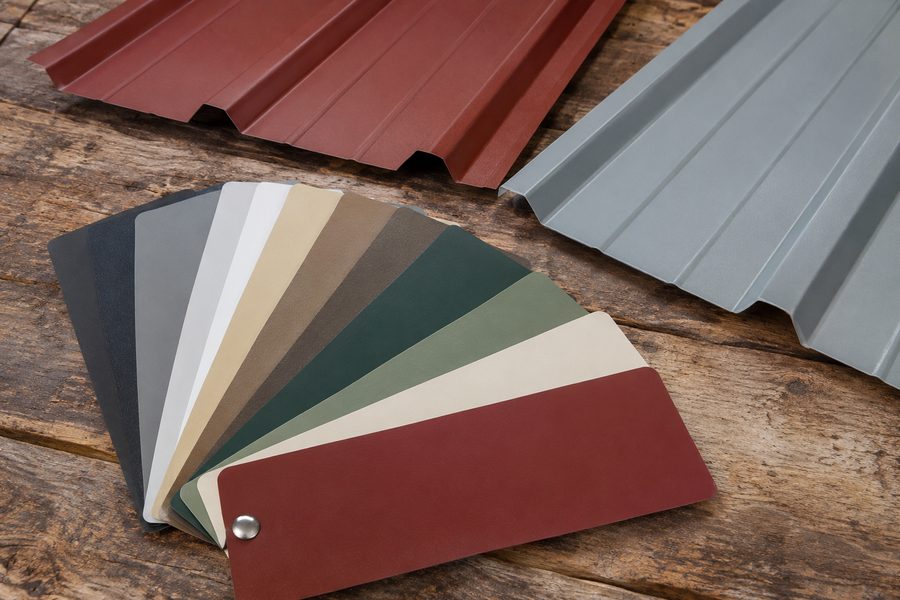
- Painted (SMP): a silicone-modified polyester paint over a metallic coating. The most common painted finish, with good color life at a moderate price.
- Painted (PVDF): a premium fluoropolymer paint with the best resistance to fading and chalking. Common on architectural and commercial projects.
- Specialty finishes: wood-grain and rust-look prints, matte and textured finishes, and metallic colors.
Manufacturer paint warranties commonly run 20 to 40 years or more, depending on the paint system. Warranty details for your order are in your account.
Installation basics
- Over solid decking or open framing: most through-fastened panels go over plywood or OSB decking, or across wood or steel purlins.
- Underlayment: over solid decking, a synthetic or high-temperature underlayment goes beneath the panels.
- Fasteners: screws with sealing washers go through the flat of the panel or the rib, as the manufacturer specifies. Use color-matched screws on painted panels.
- Closures and trim: foam closures seal the gaps under the ribs at the eave and ridge. Matching trim finishes the eaves, rakes, ridges and valleys.
- Over existing shingles: many codes allow metal over one layer of shingles, often with spacers or battens. Check local code first.
Always follow the manufacturer's installation guide for the panel you buy.
What to include in your quote request
- Panel profile, gauge and color
- Panel lengths and quantities (a cut list), or plans or a roof measurement report
- Trim pieces needed (ridge, eave, rake, valley, sidewall, endwall)
- Fasteners, closures, sealant and underlayment
- Job location
Related products
Common questions
How long does a metal roof last?
Through-fastened metal roofs commonly last 40 years or more, depending on the coating, climate and upkeep.
Is a metal roof noisy in the rain?
Over solid decking with underlayment, metal roofs are usually about as quiet as other roofs. Open-framed buildings without insulation are louder.
Will hail dent metal panels?
Large hail can dent any metal panel. Thicker gauges and some impact-rated panels resist denting better. Many panels carry Class 4 impact ratings, but ratings vary by product.
Do the screws need maintenance?
The rubber washers can wear over time. Inspecting and replacing worn screws every 10 to 20 years helps prevent leaks.
Can metal panels be cut on site?
Yes, with metal snips or a panel shear. Avoid abrasive saw blades, which leave hot metal filings that can rust on the panel surface.