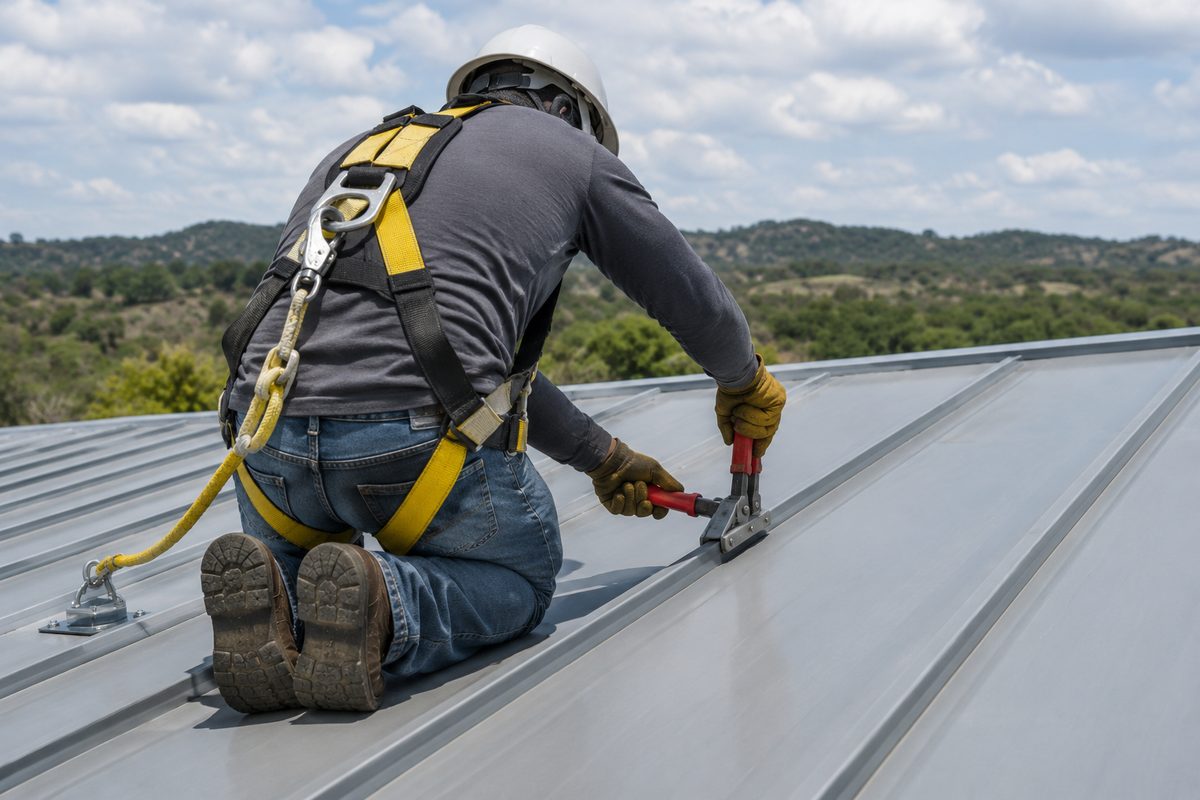
Fall protection
| Product | What it does | Notes |
|---|---|---|
| Full-body harness | Holds the worker and spreads fall forces across the body | Sized to the worker; inspect before each use |
| Lanyard / self-retracting lifeline | Connects the harness to the anchor and stops a fall | Shock-absorbing lanyards or retractable lines |
| Rope grab and vertical lifeline | Lets the worker move up and down the roof while staying tied off | Common on steep roofs |
| Roof anchors | Fixed point the system attaches to | Reusable or single-use; some made for metal seams and purlins |
| Fall protection kits | Harness, lifeline, rope grab and anchor together | A simple way to equip a crew |
| Guardrail and warning-line systems | Edge protection for low-slope roofs | Used where workers are near open edges |
| Roof brackets and toe boards | Footing on steep roofs | Common on shingle and tile roofs |
Fall protection should meet current federal workplace safety standards. Users must be trained, and equipment must be inspected before use and taken out of service after a fall.
Job-site safety
- Cut-resistant gloves for handling metal panels and trim
- Safety glasses and face shields for cutting and drilling
- Hearing protection for saws and screw guns
- Hard hats and high-visibility vests
- Soft-soled roofing boots that grip and don't scratch panels
- Tarps and debris netting to protect the site and neighbors
Metal roofing and siding tools
| Tool | What it does |
|---|---|
| Hand seamers | Bend and close trim and panel edges by hand |
| Mechanical seamers (hand and power) | Close mechanical standing seams |
| Snips (left, right, straight) | Cut panels and trim; color-coded by cut direction |
| Electric shears and nibblers | Cut panels quickly without burning the paint |
| Panel benders and brakes | Bend trim and panel ends on site |
| Screw guns with depth-setting nose | Drive screws to the right depth so washers seal correctly |
| Magnetic sweeper | Picks up drill shavings and stray screws |
| Hemming and notching tools | Make clean hems and notches for standing seam |
Avoid abrasive saws on painted metal. Grinders and abrasive blades create hot sparks that burn the paint and coating and leave rust spots. Shears, snips and nibblers are the safer choice for painted panels.
Shingle, tile and low-slope tools
- Roofing nailers and coil nails
- Utility knives and hook blades
- Chalk lines and roofing squares
- Tile cutters and diamond blades for clay and concrete tile
- Hot-air welders and seam rollers for TPO and PVC
- Torches, rollers and spreaders for mod-bit and coatings
Choosing and caring for tools
- Match the tool to the material: snips for trim, shears for long cuts, and the right seamer for the panel system.
- Keep blades sharp; dull blades bend panel edges and leave burrs.
- Clean and lubricate seamers and shears after use.
- Inspect harnesses and lifelines before every use and follow the maker's service-life guidance.
What to include in your quote request
- Products and quantities
- Crew size, for fall protection kits
- Roof type and panel system, for seaming tools
- Sizes for harnesses, gloves and boots
- Job location
Related products
Common questions
Is fall protection required on residential roofs?
In most cases, federal workplace safety rules require fall protection for workers at 6 feet or more on construction sites, including homes. Check current rules for your work.
What anchor do I use on a metal roof?
Use anchors made for the roof type, such as seam-clamp anchors on standing seam or anchors rated to attach to purlins. Follow the anchor maker's instructions.
Do I need a power seamer?
For short runs and repairs, hand seamers work. For full mechanical seam roofs, a power seamer is much faster and gives a more even seam.
Why not cut panels with a grinder?
The sparks burn the paint and coating, and the hot metal fragments can rust on the panels. Use shears, snips or nibblers.
How often should a harness be replaced?
Follow the maker's guidance, inspect before each use, and remove it from service after a fall or if you see damage.