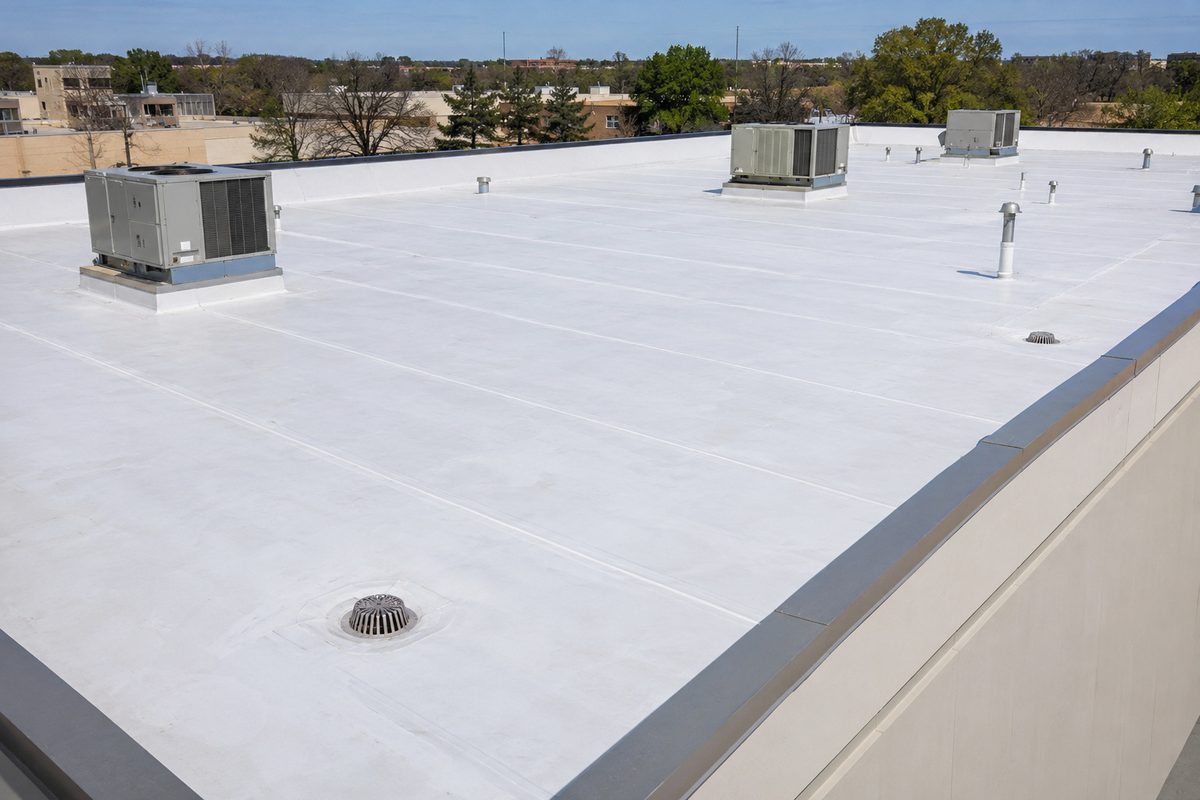
Membrane types
| Type | What it is | Typical thickness | How seams are joined | Common uses |
|---|---|---|---|---|
| TPO | White or light-colored thermoplastic single-ply sheet | 45, 60 or 80 mil | Hot-air welded | Warehouses, retail, offices; the most common new commercial roof |
| PVC | Thermoplastic single-ply sheet, highly chemical-resistant | 50, 60 or 80 mil | Hot-air welded | Restaurants, plants, roofs exposed to grease or chemicals |
| EPDM | Black or white synthetic rubber single-ply sheet | 45, 60 or 90 mil | Seam tape or adhesive | Re-roofs, cold climates, large simple roofs |
| Modified bitumen (mod-bit) | Asphalt sheet reinforced with polyester or fiberglass | 2 to 4 layers, each roughly 100 to 180 mil | Torch, cold adhesive or self-adhered | Smaller commercial roofs, flat residential roofs, high foot traffic |
| Built-up roofing (BUR) | Layers of felt and asphalt, often topped with gravel | Multi-ply system | Hot or cold asphalt between plies | Older commercial buildings and repairs |
Thicknesses, widths and colors vary by manufacturer. Your quote lists the exact specs.
TPO. A heat-welded sheet with a reflective white surface that keeps buildings cooler. It is the most widely installed new commercial membrane in the U.S., and it suits hot climates well.
PVC. Similar to TPO in look and install method, with better resistance to oils, grease and chemicals. Often chosen for restaurants and industrial roofs.
EPDM. A durable rubber membrane with a long track record. It comes in very large sheets, so there are fewer seams on big, simple roofs.
Modified bitumen. An asphalt-based roll roofing installed in two or more layers. It is tough, handles foot traffic well and is a common choice for smaller flat roofs and patches.
Built-up roofing. The traditional multi-layer flat roof. Today it is mostly used for repairs and matching existing roofs.
Attachment methods
- Mechanically attached: the membrane is fastened through plates along the seams into the deck. Fast and economical.
- Fully adhered: the membrane is glued to the insulation or cover board. Smoother look and better wind performance.
- Induction welded: plates are fastened under the membrane and bonded to it with an induction tool, with no fasteners through the sheet.
- Ballasted: the membrane is held down by stone or pavers. Less common, and limited by roof structure and wind zone.
Insulation and cover board
Most commercial roofs include rigid insulation under the membrane. Polyiso board is the most common, with tapered polyiso used to build slope toward drains. A cover board of gypsum or high-density board on top protects the insulation and gives a firm base for the membrane. Energy codes set minimum insulation values that depend on the building and location.
Coatings for existing roofs
Where the existing roof is still sound, a roof coating can extend its life. Silicone, acrylic and other coatings are rolled or sprayed over the roof to seal it and reflect sunlight. See insulation and coatings for details.
Installation basics
- Low-slope roofs still need slope: at least ¼:12 is common, built in with tapered insulation or framing, so water reaches the drains.
- Edges, curbs, drains and penetrations need flashing made for the membrane you use.
- Manufacturer warranties on commercial roofs often require a certified installer and an inspection.
Always follow the manufacturer's installation guide and local code.
What to include in your quote request
- Membrane type, thickness and color, if known
- Roof size, or plans or a roof measurement report
- New roof, re-roof or recover over the existing roof
- Insulation, cover board, adhesives, fasteners, flashing and edge metal needed
- Building type and job location
Related products
Common questions
Which membrane is best?
It depends on the building. TPO is the most common for new roofs, PVC for grease or chemicals, EPDM for large simple roofs and mod-bit for small roofs and heavy foot traffic. Tell us about the building and we can help narrow it down.
What does "mil" mean?
One mil is one-thousandth of an inch. A 60 mil membrane is 0.060″ thick.
Can a new roof go over the old one?
Often, if the existing roof is dry and code allows one more layer. This is called a recover. Wet insulation must be removed first.
Do flat roofs leak more?
Not when designed and installed correctly. Most problems come from poor drainage, standing water and failed flashing at edges and penetrations.
Do you supply edge metal and gutters?
Yes, edge metal, copings and gutters are part of trim and flashing. Add them to your quote request.