Standing seam systems
| System | How it attaches | Typical seam height | Typical panel width | Typical gauges | Typical minimum roof pitch | Common uses |
|---|---|---|---|---|---|---|
| Snap-lock | Clips or a nail flange; the next panel snaps over the seam | 1″ to 1¾″ | 12″ to 18″ | 26, 24 | 3:12 | Homes and light commercial over solid decking |
| Nail-strip (fastener flange) | Screws through a slotted flange hidden under the next panel | 1″ to 1½″ | 12″ to 16″ | 26, 24 | 3:12 | Residential roofs, accent roofs, porches |
| Mechanical seam, single lock | Clips; the seam is folded 90° with a seaming tool | 1½″ to 2″ | 12″ to 18″ | 24, 22 | 1:12 to 2:12 | Homes and commercial roofs, longer panel runs |
| Mechanical seam, double lock | Clips; the seam is folded 180° twice | 2″ | 12″ to 18″ | 24, 22 | ½:12 or lower | Low-slope commercial roofs, high-wind areas |
| Structural standing seam | Clips over open purlins; tall ribs carry the load | 2″ to 3″ | 16″ to 24″ | 24, 22 | ¼:12 | Warehouses, metal buildings, large commercial roofs |
Exact dimensions, gauges and pitch limits vary by manufacturer. Your quote lists the specs for the system you order.
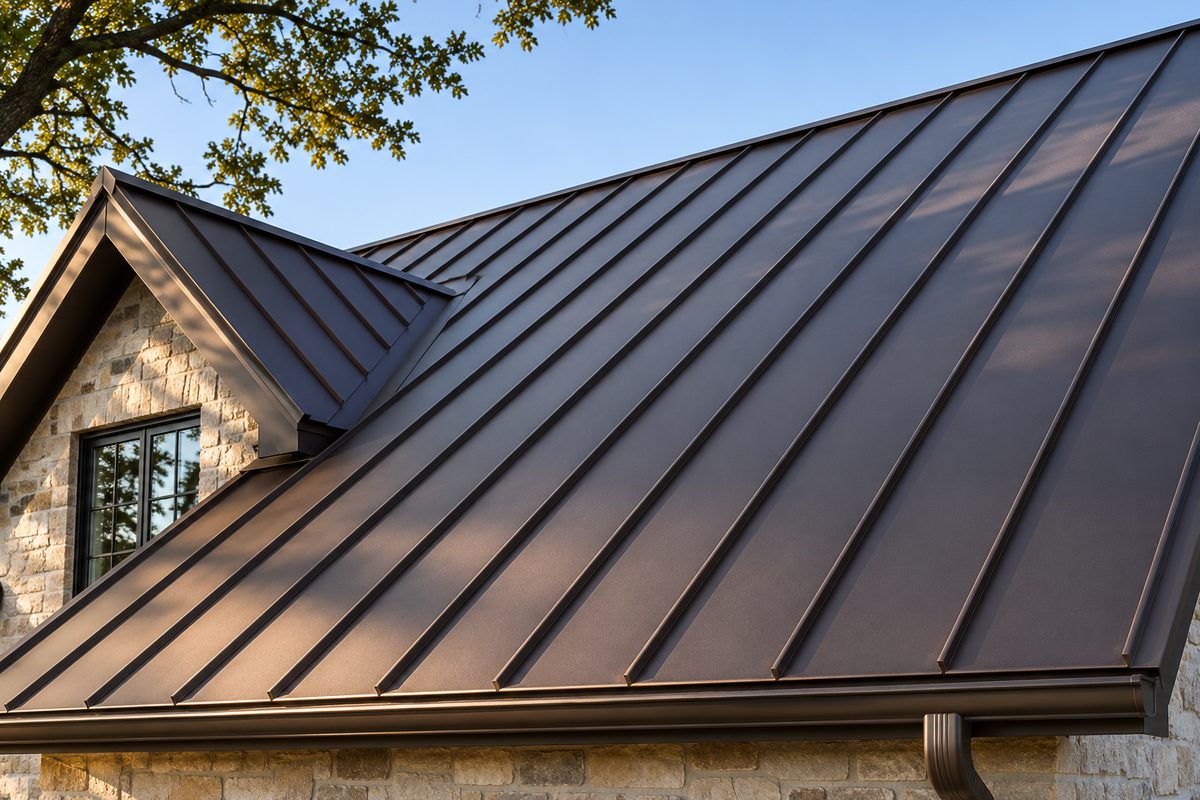
Snap-lock. The most popular residential standing seam. Panels lock together by hand, so installation is fast and no seaming tool is needed. It goes over solid decking on medium and steep roofs.
Nail-strip. Similar look to snap-lock, but each panel is screwed through a slotted flange that the next panel covers. Simple and economical for homes and shorter panel runs, because thermal movement limits how long the panels can be.
Mechanical seam. The seams are folded closed with a hand or power seamer after the panels are installed. Single-lock seams suit most roofs; double-lock seams give the most weather-tight joint and work on very low slopes. Mechanical seam panels handle long runs and high winds well.
Structural standing seam. A heavy-duty system with tall ribs designed to span open steel purlins without a solid deck. It is the standard roof on warehouses, factories and large metal buildings.
Clips and thermal movement
Metal expands and contracts with temperature. On long panels, that movement adds up. Fixed clips hold the panel in place and suit shorter runs. Floating (sliding) clips let the panel move along its length while staying tight to the roof, which prevents stress on the seams and fasteners. Long runs and commercial roofs usually call for floating clips.
Flat panels and oil canning
Oil canning is a natural waviness that can show in the flat areas of metal panels, especially in bright light. It does not affect performance, but it can affect appearance. Ways to reduce it:
- Choose panels with striations or pencil ribs, small lines rolled into the flat.
- Choose a narrower panel or a heavier gauge.
- Install over a flat, even deck and avoid over-tightening clips.
Finishes and colors
Most standing seam panels come with a premium PVDF paint for long color life, and many lines also offer SMP paint, bare aluminum-zinc coated steel, matte and metallic finishes. Some systems are available in aluminum for coastal areas, and in copper or zinc for architectural projects. Manufacturer paint warranties commonly run 30 to 40 years or more. Warranty details for your order are in your account.
Installation basics
- Solid deck: snap-lock, nail-strip and most mechanical seam panels go over plywood or OSB.
- Underlayment: a high-temperature synthetic underlayment is common, and often required, under standing seam.
- Trim: standing seam uses its own trim profiles at the eave, rake, ridge and valleys. Ordering trim made for the same system matters.
- Panel length: panels are usually made to the exact length of each roof run. Very long panels may need special shipping or on-site forming.
Always follow the manufacturer's installation guide for the system you buy.
What to include in your quote request
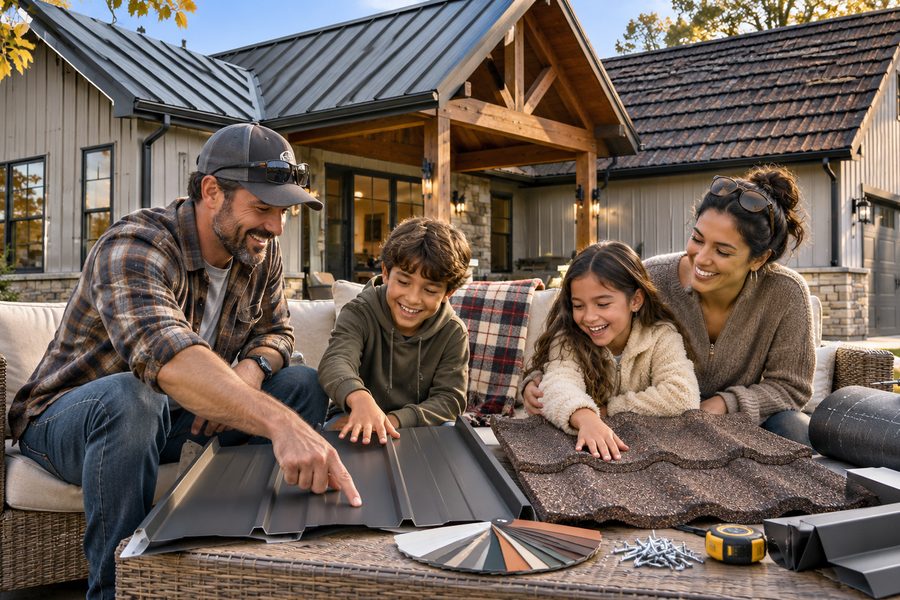
- System type (snap-lock, nail-strip, mechanical seam or structural)
- Seam height, panel width, gauge and color
- Panel lengths and quantities, or plans or a roof measurement report
- Trim, clips, fasteners and underlayment needed
- Job location
Related products
Common questions
Is standing seam worth the extra cost?
It costs more than through-fastened panels, but hidden fasteners mean fewer leak points and less maintenance, and the cleaner look adds curb appeal. For long-term homes and commercial roofs, many owners find it worth it.
Can standing seam go on a low-slope roof?
Mechanical seam and structural systems can, some down to ½:12 or ¼:12. Snap-lock and nail-strip systems usually need at least 3:12.
Do I need a seaming tool?
Only for mechanical seam panels. Snap-lock and nail-strip panels lock or fasten by hand.
Can I add snow guards or solar panels?
Yes. Clamps that grip the seam let you attach snow guards and solar racking without drilling through the roof.
How long does a standing seam roof last?
Commonly 50 years or more with a quality paint system and proper installation.